Houston After-Hours Appliance Repair: Steps Before the Tech Arrives
Staying Calm When Appliances Fail After-Hours
When a major appliance quits at night, it can throw the whole house off. Food might be at risk, water could be leaking, or you might worry about fire or gas. Knowing what to do in the first few minutes can keep your family safe and prevent bigger damage.
In this guide, we walk through simple, clear steps you can take before an emergency appliance repair in Houston technician arrives. We will cover safety checks, how to shut things down, how to protect your food, and what to document so the repair goes faster. As a family-owned appliance repair company serving Houston, Katy, and nearby areas, we want homeowners to feel prepared, even when trouble hits after-hours.
First Priority: Protect Your Family and Your Home
Safety comes first, every time. Before worrying about food, clothes in the washer, or a half-cooked dinner, pay attention to your senses. If something feels “off,” trust that feeling.
Watch and listen for red flags like:
- Burning plastic or “hot electrical” smells
- Smoke, even a light haze near the appliance
- Sparks from a cord, outlet, or under the appliance
- Breakers that trip again right after you reset them
- Banging, grinding, or screeching noises from motors
- Water pooling near electrical outlets or cords
If it seems minor and there is no smell of burning, you can usually unplug the appliance. But if the outlet or plug feels hot, do not touch it. Instead, go to your home’s main breaker panel and turn off power to that circuit.
Different Appliances Come with Different Risks:
- Gas ranges or dryers: If you smell gas, hear hissing near a gas line, or see a burner that will not shut off, leave the area and call your gas company or 911 before you do anything else.
- Dryers: Overheating, a strong burning lint smell, or smoke from the vent can be a fire risk. Stop the cycle, leave the door closed, and cut power at the breaker if needed.
- Dishwashers and washers: Leaks around these machines can reach outlets and power cords on the floor or wall. Avoid stepping in standing water, and shut off power at the breaker if water is near any electrical parts.
- Electric ovens: If the oven will not shut off or controls are acting strange, switch it off at the breaker panel. Do not keep using it “just this once.”
Any sign of active fire, heavy smoke, or strong gas smell is an emergency. In those cases, call 911 or your gas company first. Once your home is safe, then it is time to plan for emergency appliance repair in Houston.
How to Safely Shut Down Problem Appliances
Once you are sure there is no immediate danger, the next step is to safely power down the problem appliance. The goal is to stop the issue from getting worse without taking anything apart.
Here are basic guidelines for common appliances:
Refrigerators and Freezers
- If it is just not cooling but there is no smell, no sparks, and no leaks, you can usually leave it plugged in with the doors closed while you plan your next step.
- If you smell burning, hear loud buzzing from the back, or see smoke, unplug it by gripping the plug, not the cord. If the outlet or plug is hot or damaged, shut off the breaker instead.
Ovens and ranges
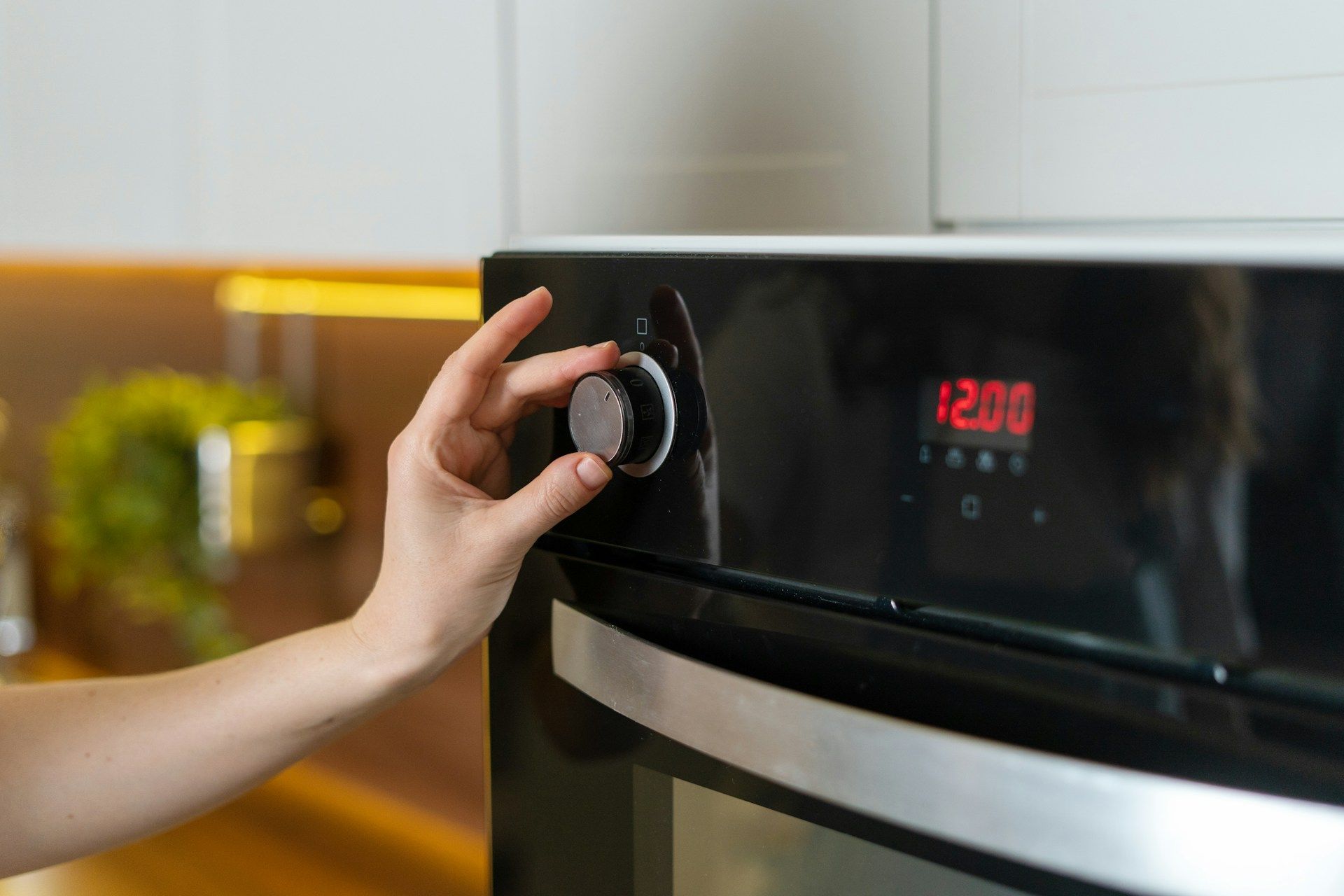
- Turn all burners and oven settings to Off and check the indicator lights.
- For gas units, make sure all control knobs are fully in the Off position. If you still smell gas, leave the home and contact your gas company or 911.
- If the oven will not turn off, locate your breaker panel and flip the breaker labeled for the range or kitchen.
Washers, Dryers, and Dishwashers
- Stop the cycle using the Stop or Cancel button if available. For top-load washers, opening the lid usually stops the drum.
- Turn off the water supply valves behind or near the washer or dishwasher by turning the knobs clockwise. This helps prevent more leaking.
- Unplug the appliance by pulling on the plug head, not yanking the cord. If you cannot reach safely, shut off the breaker instead.
To find key controls:
- Power buttons are usually on the front control panel.
- Water shutoff valves are often on the wall behind the washer or under the sink near a dishwasher.
- The main electrical panel is often in a garage, hallway, or outside wall box. Breakers should be clearly labeled, but if not, flip only the one you are sure controls that area, if possible.
In early spring around Houston, evenings can be a bit cooler, which may slightly slow food warming during a fridge problem. But the humidity and warm days still make quick action important, so do not rely on the weather to keep food safe.
Most important, do not:
- Open any internal machine panels
- Bypass safety switches or door latches
- Try DIY electrical or gas repairs
Those steps are risky and can also make the final repair harder.
Food-Safety Triage for Fridge and Freezer Failures
When a refrigerator or freezer fails after-hours, a common worry is, “Will all this food go bad?” You can usually buy yourself a bit of time with smart food triage.
General food safety timelines:
- Refrigerator, unopened: about 4 hours of safe temperature.
- Freezer that is full and unopened: up to 48 hours.
- Freezer that is half-full and unopened: about 24 hours.
Keep doors closed as much as you can. Every time the door opens, cold air escapes and warm, humid air sneaks in.
Prioritize saving high-risk items:
- Raw meat and seafood
- Dairy products like milk, yogurt, and soft cheeses
- Leftovers, cooked rice, cooked pasta
- Eggs and egg dishes
Move these into:
- The back of the fridge, which is usually the coldest
- A cooler with plenty of ice or ice packs
- Any spare drink cooler you use for outdoor get-togethers
If you have a simple fridge thermometer, place it in the warmest-looking spot to get a rough idea of how quickly the temperature is climbing.
When to throw food away:
- If perishable food has been above fridge temperature for several hours
- If meat, seafood, or dairy smells off, looks gray, slimy, or odd
- If you are not sure how long the food sat warm
The rule of thumb is, when in doubt, throw it out. Foodborne illness is not worth the risk, especially if you have children, older adults, or anyone with a weak immune system in the home.
Document the Problem to Speed Up Your Repair Visit
A little bit of information gathered now can make your repair smoother later. While you wait for help, take a few minutes to document what is going on.
Helpful details to write down:
- Appliance brand, model number, and serial number
- When the problem first started and what you were doing at the time
- Exact sounds, smells, or error messages you noticed
- Any recent repairs or issues with the same appliance
Model and serial labels are usually found:
- Just inside the door of fridges, washers, and dryers
- On the door frame or inside edge of ovens and dishwashers
- On the back or side of some units
Use your phone to take photos or short videos of:
- Error codes or blinking lights on the display
- Puddles or leaks on the floor
- Any scorch marks, discoloration, or warped plastic
- Heavy frost or ice buildup in a freezer or fridge
Good documentation helps the technician arrive with a better idea of what might be wrong, which can reduce diagnostic time and the chance of multiple trips. It also helps you track what has been done over the life of the appliance.
Consider keeping a simple “appliance file” at home, either in a folder or on your phone, with:
- Photos of model and serial labels
- Copies or photos of warranty info
- Notes from past service visits
When to Call a Service Company and What Happens Next
Some problems can wait until morning. Others should be handled as soon as you can arrange it. As a general guide, treat these as higher priority:
- A full fridge or freezer that has completely stopped cooling
- Active leaks that could damage floors, walls, or nearby outlets
- Breakers that trip again and again
- Burning smells, smoke, or signs of overheating
- No heat from an oven or range when you absolutely need to cook for the next day
Once you set up a visit with an appliance repair company, you can expect a confirmation and an estimated arrival window. Because you have already written down details and taken photos or videos, you will be ready when the technician asks questions about what you saw and heard.
To make the visit easier and faster:
- Clear a path around the appliance
- Move any items stored on top of the unit
- Secure pets in another room
- Make sure the breaker panel is easy to reach
- Have your notes and questions nearby
By staying calm, focusing on safety, protecting your food, and documenting what you see, you help protect your home and give your technician a head start the next time an appliance acts up after-hours.
Get Fast, Reliable Help For Your Appliances Today
If your fridge, washer, or stove just failed, we know you cannot wait days for service. At A & A Appliance Repair, we offer prompt
emergency appliance repair in Houston so you can get your home back to normal quickly. Reach out now and we will schedule a convenient time to diagnose and fix the problem as soon as possible. Have questions or need immediate assistance, just
contact us.